Tinggalkan pesan
Jika Anda tertarik dengan produk kami dan ingin mengetahui lebih detail, silakan tinggalkan pesan di sini, kami akan membalas Anda sesegera mungkin.
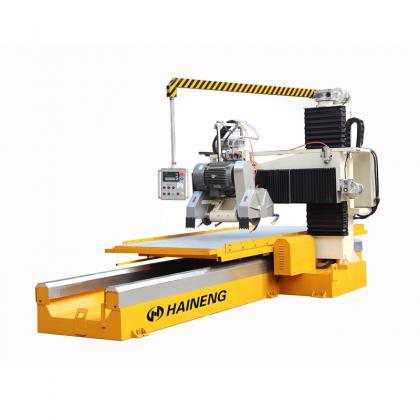
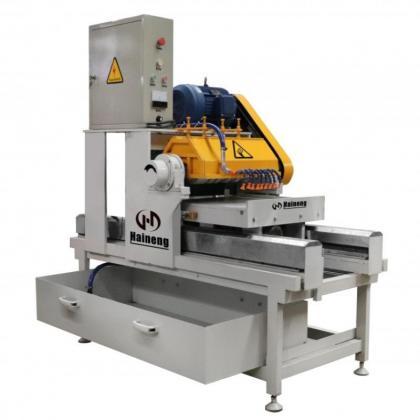
The Haineng ZQ-22/45 thin stone veneer saw is available in two single-blade configurations, with 22 kW and 45 kW main motors. Both models feature adjustable conveyor speed, while their blade diameter ranges and maximum cutting depths differ.
For stone fabricators and veneer producers evaluating a new cutting machine, these specifications provide a starting point. The next step is to determine which configuration suits the material and the work required in the workshop.
A thin stone veneer saw is used in stone processing where stone pieces need to be cut for thinner-format products. The exact application depends on the material, the incoming workpiece and the required finished dimensions.
Before selecting a stone veneer cutting machine, it is worth looking at the actual cutting task rather than relying on the product name alone.
For example, a workshop processing different stone types may need to consider:The maximum height and dimensions of the incoming stone.The target thickness of the finished pieces.The blade diameter required for the intended cut.The surface quality and dimensional consistency expected after cutting.The number of pieces that need to be processed during a working shift.These details influence how the machine should be configured. They also help suppliers determine whether a single-blade model is suitable or whether a different cutting arrangement deserves consideration.Haineng ZQ-22/45 Thin Stone Veneer Saw: Two Single-Blade Options
The ZQ-22/45 single-blade model is offered in two configurations. The higher-power version has a larger machine footprint and accommodates a larger blade diameter range.
The following specifications are taken from the manufacturer's quotation for the single-blade machine.
| Technical Specification | 30HP-1 | 60HP-1 |
|---|---|---|
| Main motor power | 22 kW (30 HP) | 45 kW (60 HP) |
| Machine dimensions (L × W × H) | 2,850 × 1,950 × 1,750 mm | 3,300 × 2,200 × 2,200 mm |
| Machine weight | 2,200 kg | 3,100 kg |
| Listed power supply | 3-phase, 240V/460V | 3-phase, 240V/460V |
| Listed amperage | 86/43 A | 172/86 A |
| Water consumption | 3 m³/h | 3.5 m³/h |
| Blade diameter | Ø800–1,000 mm | Ø1,000–1,200 mm |
| Standard listed blade speed | 900 rpm, adjustable | 780 rpm, adjustable |
| Maximum cutting depth | 380 mm | 480 mm |
| Adjustable conveyor speed | 600–2,450 mm/min | 600–2,450 mm/min |
Note: Confirm the exact electrical configuration, blade compatibility and operating parameters for the machine being quoted. The maximum cutting depth listed above should not be interpreted as the finished veneer thickness.
The 22 kW version may be worth considering when its cutting capacity matches the workpieces and production requirements of the workshop. It has a smaller footprint and a lower listed machine weight.
The 45 kW version supports a larger blade diameter range and has a listed maximum cutting depth of 480 mm, compared with 380 mm for the 22 kW model. This may make it a more appropriate candidate for jobs requiring the additional cutting capacity.
However, a higher-power motor does not automatically mean that every stone type can be processed faster. Actual performance depends on the material, blade specification, workpiece dimensions, feed setting and required cutting quality.
A practical comparison should therefore use the same representative workpiece and the same finished-product requirements wherever possible.
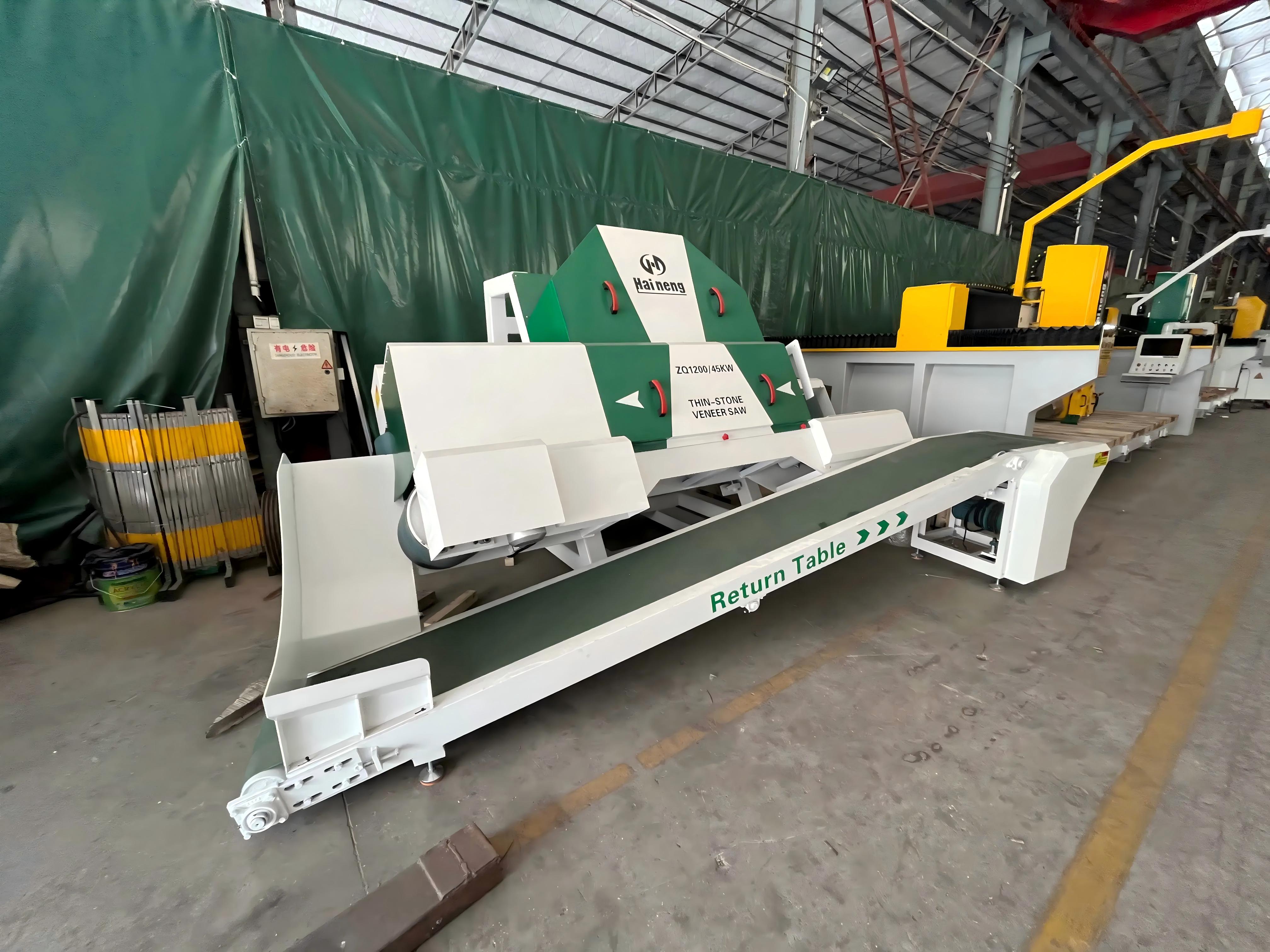 The ZQ-22/45 has an adjustable conveyor speed of 600–2,450 mm/min.
This range gives operators room to adjust the material feed to suit the cutting conditions. A suitable feed setting depends on more than the speed of the conveyor itself.
Stone hardness, natural variations in the material, blade condition and the required finish can all influence the appropriate operating setup. A feed rate that works for one job should not automatically be used for another.
Before putting a new stone cutting machine into regular production, operators should establish suitable settings through controlled test cuts. The goal is to find a workable balance between cutting performance, surface quality, blade wear and production time.
For buyers, it is useful to ask the manufacturer to demonstrate the machine using representative material and to document the settings used during the test.
Blade diameter and maximum cutting depth are related to cutting capacity, but they are not interchangeable specifications.
For the ZQ-22/45 single-blade models, the listed blade diameter ranges are:
1.30HP-1: 800–1,000 mm.
2.60HP-1: 1,000–1,200 mm.
The listed maximum cutting depths are 380 mm and 480 mm, respectively.
When evaluating a thin stone veneer saw, buyers should check whether the selected blade is suitable for the intended material and whether the machine can accommodate the required workpiece dimensions.
Finished veneer thickness is a separate consideration. The single-blade specifications in the quotation do not establish a guaranteed finished thickness range or a thickness tolerance. These requirements should be agreed upon with the supplier before the purchase order is finalized.
If dimensional consistency is important for the next production stage, ask for sample-cut results and clarify the acceptance criteria in writing.
Machine performance is only one part of a successful installation. The utilities and available workshop space also need to be considered before ordering.
The quotation lists water consumption of 3 m³/h for the 22 kW model and 3.5 m³/h for the 45 kW model.
Confirm the required water flow and the workshop's available supply before installation. If the factory uses a water-recycling or settling system, check that the existing arrangement is suitable for the selected machine and its operating conditions.
The single-blade quotation lists a three-phase 240V/460V supply. The available power supply can be requested according to the manufacturer's quotation terms.
Do not assume that the listed voltage automatically matches the electrical system at your facility. Confirm the required voltage, frequency, phase and rated current for the exact configuration before production and shipment.
The listed machine dimensions are 2,850 × 1,950 × 1,750 mm for the 22 kW version and 3,300 × 2,200 × 2,200 mm for the 45 kW version.
The installation area needs to accommodate more than the machine body itself. Allow suitable space for material loading and unloading, operator access, routine maintenance and the movement of workpieces through the cutting area.
The manufacturer's quotation also lists an English foundation drawing, an electrical drawing and an English manual among the supplied documents. These should be reviewed during installation planning.
A machine quotation is easier to evaluate when the supplier understands the job in detail. Instead of asking only for the price of a stone veneer saw, prepare the following information:
1. What material will you cut?
Identify the stone type and, where possible, provide representative samples or clear photographs. Natural stone can vary considerably, so the actual material matters.
2. What are the incoming and finished dimensions?
Provide the maximum workpiece height and size, the intended finished thickness and any important dimensional tolerances.
3. How much production capacity do you need?
Explain your daily target, operating hours and current production bottlenecks. This helps the supplier assess the configuration against your actual workload.
4. Which blade and machine configuration are required?
Confirm the suitable blade diameter, machine model and blade specification. If you are considering a two-blade or three-blade version, request its separate technical data rather than assuming the single-blade specifications apply.
5. What are your workshop's operating conditions?
Provide the available power supply, water arrangements, installation space and destination port. These details help clarify the technical configuration and the total equipment and shipping requirements.
The more specific the production requirements, the easier it is to compare quotations on a like-for-like basis.
The quotation lists blade diameters of 800–1,000 mm for the 22 kW model and 1,000–1,200 mm for the 45 kW model. Confirm the appropriate blade for your material and cutting task.
The listed maximum cutting depths are 380 mm for the 22 kW model and 480 mm for the 45 kW model. These figures describe cutting depth, not the guaranteed thickness of the finished stone veneer.
Yes. Both single-blade configurations list an adjustable conveyor speed of 600–2,450 mm/min. The appropriate setting should be established according to the material, blade and required cutting quality.
The quotation states that the available power supply can be requested according to customer requirements. Confirm the exact electrical specifications with the manufacturer before placing the order.
Provide the supplier with the stone type, incoming workpiece dimensions, target finished thickness and required quality. Where possible, request a cutting test using representative material and agree on the acceptance criteria before confirming the machine configuration.
Selecting a thin stone veneer saw starts with the job the machine needs to perform. Motor power, blade diameter and maximum cutting depth are important, but they should be evaluated alongside material characteristics, finished dimensions, feed settings and workshop requirements.
Haineng offers the ZQ-22/45 single-blade saw in 22 kW and 45 kW configurations. To assess which version suits your production line, share your stone type, incoming workpiece dimensions, target finished thickness, daily production target and factory power supply.
With this information, the machine configuration can be evaluated against your actual cutting requirements before you make a purchasing decision.
No.7, Jinyuan Road, Wuli Industrial Park, Jinjiang, Quanzhou City, Fujian Province, China
E-mail : Anyth@anythmachine.com
Tel : +8613757603958
Tel : +8613586156380


Hak cipta © 2013-2026 Quanzhou New Haineng Stone Machinery Co.,Ltd.. Hak Cipta Dilindungi Undang-Undang.
 Jaringan IPv6 didukung
Pindai ke wechat




 English
 français
 Deutsch
 русский
 español
 português
 العربية
 Türkçe
 Polski